Socamel CompactServ 4S Range
Socamel CompactServ 4S range, made in France, is designed to deliver reliable, efficient and flexible meal distribution for healthcare, aged care and other professional food service environments. Combining temperature controlled performance with a compact and practical design, the range helps maintain food quality from preparation through to service while making daily handling easier for staff. It is engineered to support consistent meal delivery, ensuring that dishes are served at the correct temperature and in optimal condition, even across demanding service schedules, multiple healthcare wards or staggered service times.
The system is built around advanced thermal management principles that help preserve both hot and cold food integrity during transport and holding. This ensures meals remain appetising, safe and compliant with food safety standards from the kitchen through to the end user. The CompactServ 4S range also supports operational consistency by reducing temperature fluctuations, which can be a common challenge in busy institutional catering environments.
Available in a range of configurations and capacities, CompactServ 4S trolleys can be adapted to different operational requirements and available spaces. Their streamlined design, ease of manoeuvrability and efficient use of space make them a practical solution for organisations seeking dependable meal distribution without compromising on presentation, functionality or staff efficiency. Built with durability in mind, the range is well suited to high use environments, helping to improve workflow, reduce handling time and support a smoother overall service process.
In addition, the intuitive layout and user friendly operation assists staff in maintaining efficiency during peak service periods, while also contributing to improved hygiene and safety standards throughout the meal delivery process. Ergonomic handling features reduce physical strain on staff, while smooth rolling mobility systems support safe navigation through corridors, lifts and tight spaces. The design also supports easy cleaning and maintenance, helping facilities maintain high sanitisation standards with minimal downtime. Overall, these features work together to enhance staff wellbeing, operational flow and long term reliability in demanding service environment.
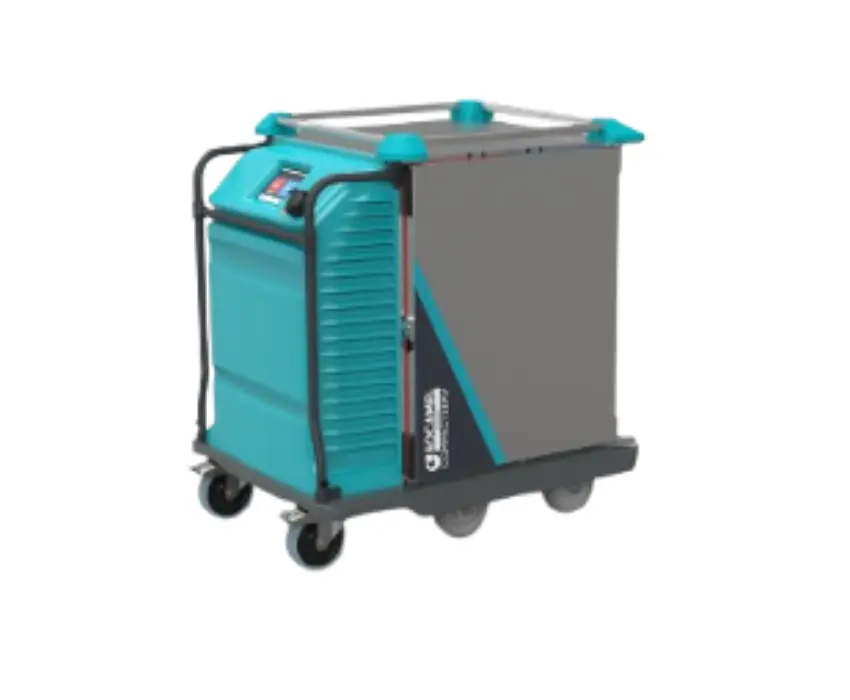
Mini 2x8 levels
Compact by design, powerful in performance, the Mini 2x8 levels delivers efficient meal distribution where space is at a premium.
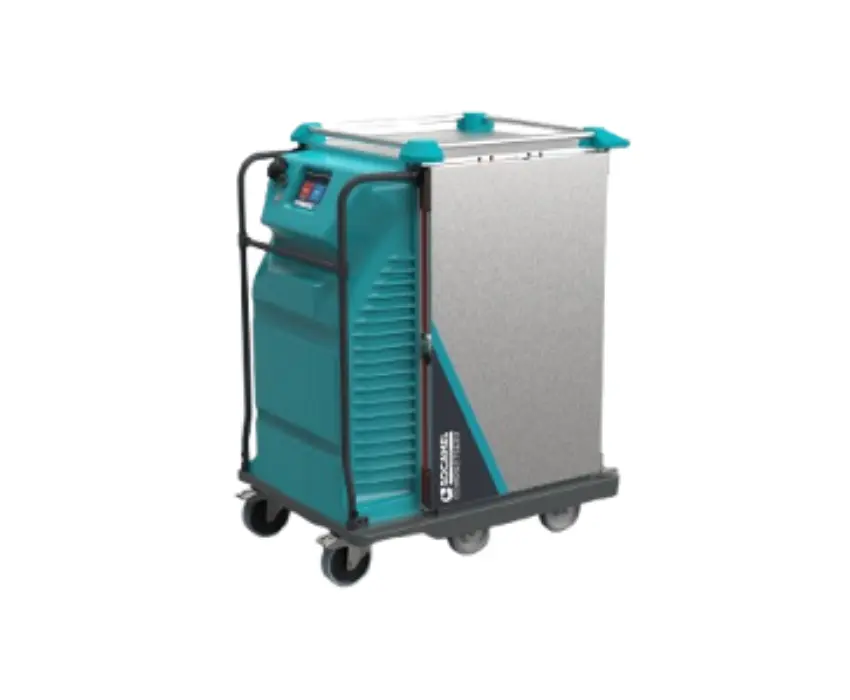
Junior 2x10 levels
The perfect balance of capacity and compactness, the Junior 2x10 levels keeps meal service efficient, organised and effortless.
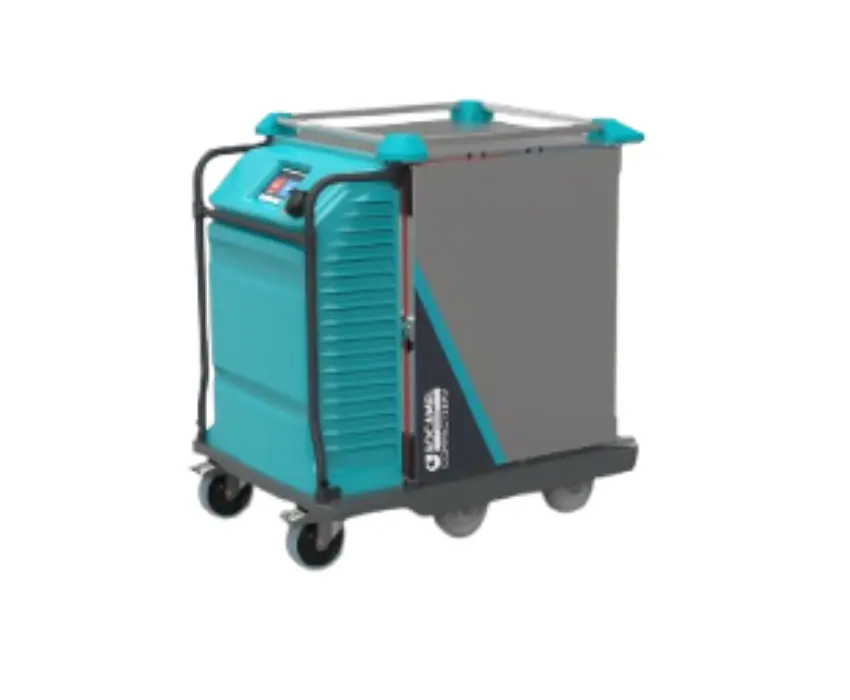
Mini 2x9 levels
Small footprint, smart capacity, the Mini 2x9 levels maximises meal distribution efficiency without taking up valuable space.
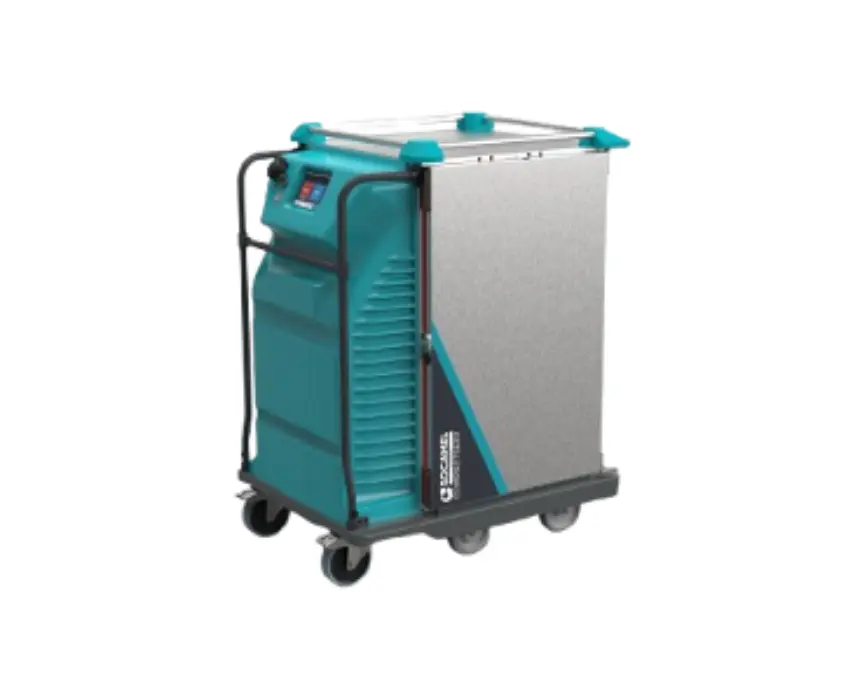
Junior 2x12 levels
More capacity but with the same compact efficiency, the Junior 2x12 is built to streamline meal distribution in demanding service environments.
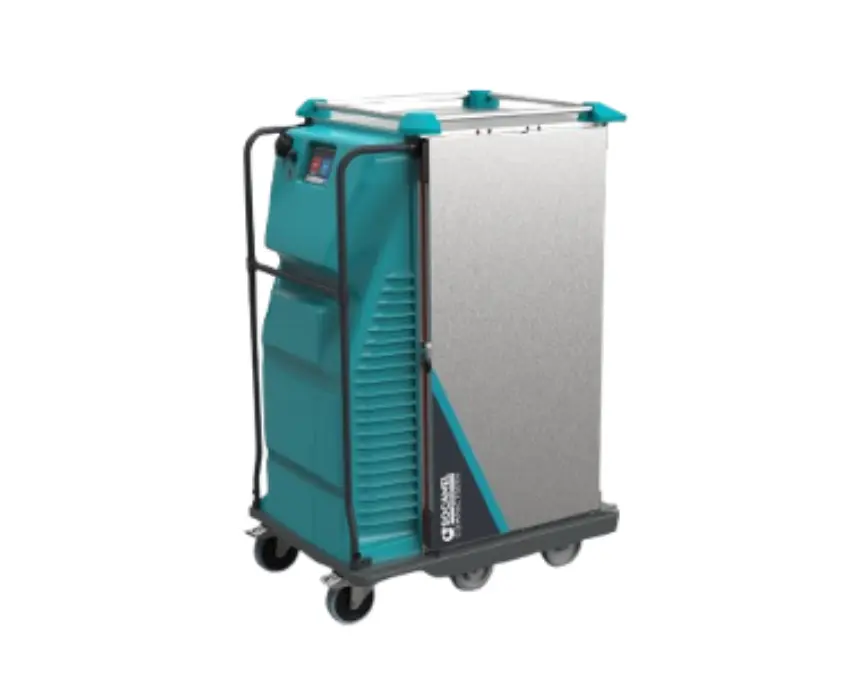
Senior 2x13 levels
Designed for higher volume service, the Senior 2x13 levels combines generous capacity with effortless mobility and dependable performance.
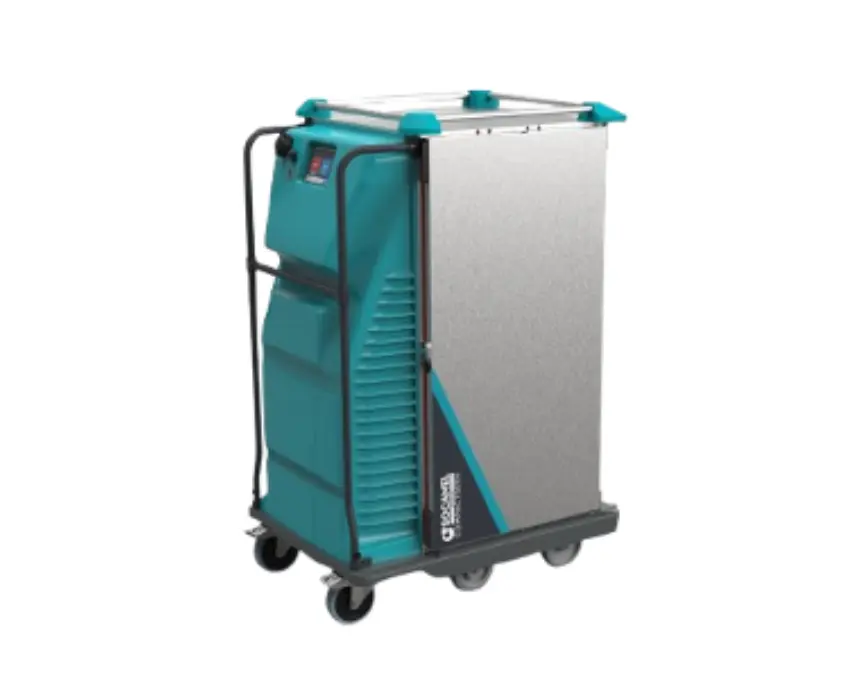
Senior 2x15 levels
Maximum capacity, streamlined service, the Senior 2x15 levels delivers efficient meal distribution for demanding, high volume operations.
Socamel CompactServ 4S Range FAQ's
The Socamel CompactServ 4S is a professional meal distribution system designed for healthcare facilities, hospitals, aged care homes, rehabilitation centres and other institutional foodservice environments. It supports the complete meal service process by helping staff transport, hold and distribute meals efficiently from the central kitchen patients, residents or other diners.
The system is designed to help maintain the required temperature, presentation and quality of meals during distribution. By combining meal transport and temperature management in one practical trolley system, the CompactServ 4S can support more consistent service, improved workflow efficiency and better control over meal delivery operations.
When selecting a meal distribution trolley, consider the number of meals your facility serves during each service period, the type of meals being provided and the distance between the kitchen and dining or patient areas. You should assess whether the trolley needs to support hot meals, chilled meals or a combination of both.
Other important factors include trolley capacity, available storage space, corridor and lift dimensions, manoeuvrability, ease of loading and unloading, cleaning requirements and staff ergonomics. It is also important to consider how the trolley will fit into your existing foodservice workflow, including meal plating, transport, service and return procedures.
The CompactServ 4S range offers different configurations to help facilities select a system that matches their operational requirements, meal volumes and available space.
The CompactServ 4S is designed to provide controlled temperature management throughout the meal distribution process. This helps hot food remain hot and chilled food remain appropriately cooled during transport and service, supporting the required serving conditions for different meal components.
Maintaining temperature control can also help preserve the taste, texture, appearance and overall presentation of meals. The system helps reduce exposure to uncontrolled ambient conditions and minimises unnecessary temperature variation between the kitchen and the point of service.
For best results, meals should be prepared, plated, loaded and distributed according to the facility's established food safety and service procedures.
Yes. The CompactServ 4S can be configured to support meal distribution involving both hot and cold food compartments. This is particularly useful for complete meals that may include hot main courses alongside chilled salads, desserts, dairy products or other cold iems.
The system allows different meal components to be managed according to their appropriate temperature requirements, helping maintain meal quality during transport and service. The exact configuration and operating method should be selected based on the facility's menu structure, service items and food safety procedures.
The CompactServ 4S supports a controlled meal distribution process by helping maintain appropriate food temperatures during holding, transport and service. This can assist foodservice teams in managing important food safety controls identified in their HACCP plan.
However, the trolley is only one part of an overall food safety system. Staff must also follow correct procedures for food preparation, cooking, cooling, reheating, plating, temperature monitoring, cleaning and sanitisation. Facilities should establish documented procedures for checking and recording temperatures at relevant stages of the meal service process.
The CompactServ 4S should therefore be used together with the manufacturer's operating instructions, local food safety regulations and the facility's own HACCP based procedures.
The safe holding time depends on several factors, including the type of food, the temperature at which it is loaded, the selected trolley configuration, ambient conditions, the number of meals being transported and the length of the service period.
The CompactServ 4S is designed to help maintain controlled temperatures during distribution, but it does not determine the maximum safe holding time for every food or operating environment. Each facility should establish appropriate holding times based on applicable food safety regulations, validated operating procedures and its HACCP plan.
Temperature checks should be carried out at suitable points, such as before loading, during distribution where required and at the point of service. If temperatures fall outside the required range, staff should follow the facility's corrective action procedure.
The time required for the CompactServ 4S to reach its operating temperature depends on the selected configuration, the starting temperature of the trolley, the surrounding room temperature, the number of meals loaded and the operating conditions.
For accurate results, the trolley should be prepared and operated according to the manufacturer's instructions. Allowing sufficient time for preheating or cooling before loading meals is important for achieving consistent temperature performance.
Exact preheating and cooling times may vary between models and configurations. Facilities should refer to the relevant technical documentation or contact the Phoeniks team for guidance specific to their selected CompactServ 4S system. To contact us please fill the enquiry form on our contact us page or give us a call on 1300 405 404.
The most suitable configuration will depend on your meal volume, service schedule, menu requirements and available space. Start by determining how many meals need to be transported and served during each distribution period. You should also consider whether hot and cold compartments need to be managed separately and how much time is available for the service process.
The physical layout of your facility is also important. Measure doorways, corridors, lifts, storage areas and turning spaces to ensure the trolley can be moved and stored comfortably. Staff workflow should also be considered, including how the trolley is loaded in the kitchen and positioned during service.
The CompactServ 4S range includes different Junior and Senior configurations, allowing facilities to select a capacity that suits their requirements. Choosing the correct size can help avoid unnecessary trolley movement, improve efficiency and ensure the system is practical for everyday use.
Yes. The CompactServ 4S is designed to streamline the meal distribution process by combining transport, temperature management and service in one integrated system. This can reduce the need for seperate handling steps and help staff move meals efficiently from the kitchen to the point of service.
A well planned trolley workflow can help reduce unnecessary walking, repeated transfers and delays between meal preparation and delivery. The trolley's capacity and practical layout can also support more organised loading and unloading, helping staff maintain a consistent service routine.
The actual time savings will depend on the facility's layout, meal volumes, staffing levels and existing procedures. Proper staff training and workflow planning are important to achieve the best results.
The CompactServ 4S is designed for regular use by foodservice, nursing and support staff in busy healthcare and institutional environments. Its trolley format supports the organised movement of meals through corridors, lifts, dining areas and patient or resident rooms.
Practical access to the meal compartments can help reduce unnecessary bending, reaching and handling during loading and service. The trolley's manoeuvrability is also intended to support smoother movement through operational areas, helping staff handle the system more comfortably.
To support safe use, staff should receive appropriate training on loading, moving, positioning, cleaning and storing the trolley. Facilities should also consider corridor widths, floor surfaces, ramps, lift access and other site specific conditions when planning trolley operation.
The CompactServ 4S is designed with hygiene and ease of cleaning as important considerations for healthcare, aged care and institutional foodservice environments. Its practical surfaces and accessible areas help support routine cleaning and sanitisation between service periods. Regular cleaning helps remove food residue, grease and other contaminants that could affect hygiene or trolley performance. Cleaning procedures should cover the internal meal compartments, external surfaces, handles, contact points, wheels and any other areas that may be exposed during daily use.
The trolley should always cleaned and sanitised according to the manufacturer's instructions and sanitised according to the manufacturer's instructions and the facility's hygiene procedures. Staff should use approved cleaning products, follow the correct dilution and contact times and avoid methods that could damage the trolley's surfaces or components. A documented cleaning schedule can help ensure that routine and periodic maintenance tasks are completeted consistently.