Socamel MultiServ 4S Range
Designed and manufactured in France, theSocamel MultiServ 4S range provides a reliable and efficient solution for transporting and distributing meals while maintaining food quality, temperature and presentation. Combining robust construction with practical functionality, the range is designed to support demanding foodservice environments such as hospitals, aged care facilities, healthcare establishments and other large scale meal service operations.
The MultiServ 4S system is engineered to ensure consistent performance throughout the entire meal distribution process. Its insulated structure helps preserve both hot and cold food temperatures, supporting compliance with food safety standards while ensuring meals are served in optimal condition. The design also helps protect meal trays during transport, reducing the risk of spills or disruption to presentation.
Available in Junior and Senior configurations, the MultiServ 4S range offers flexibility to suit different meal production and distribution requirements. This adaptability makes it suitable for a wide variety of service models, from smaller care units through to high capacity institutional kitchens. Its special layout supports efficient workflow, making loading, handling and daily operation straightforward for catering teams.
Built with hygiene, durability and ease of use in mind, the MultiServ 4S range is engineered for the demands of professional foodservice. Smooth surfaces and thoughtful design details support easy cleaning and maintenance, helping facilities maintain high hygiene standards with minimal effort. With French manufacturing quality and a choice of configurations, it provides a dependable meal distribution solution so that it can be adapted to the operational needs of different facilities while supporting long term reliability and performance.
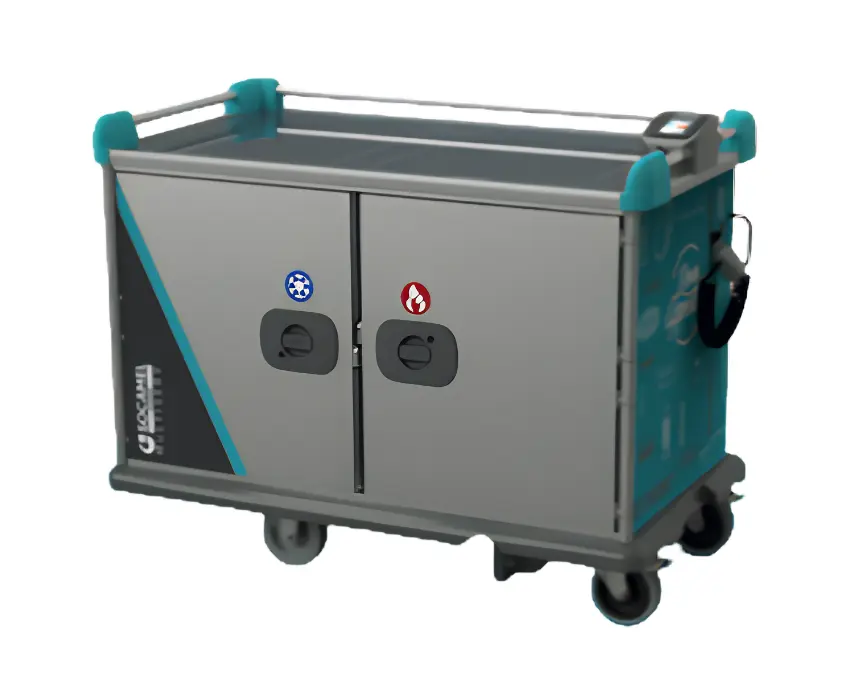
Senior
Designed for higher-capacity meal service, the MultiServ 4S Senior combines generous capacity, dependable temperature control and effortless handling.
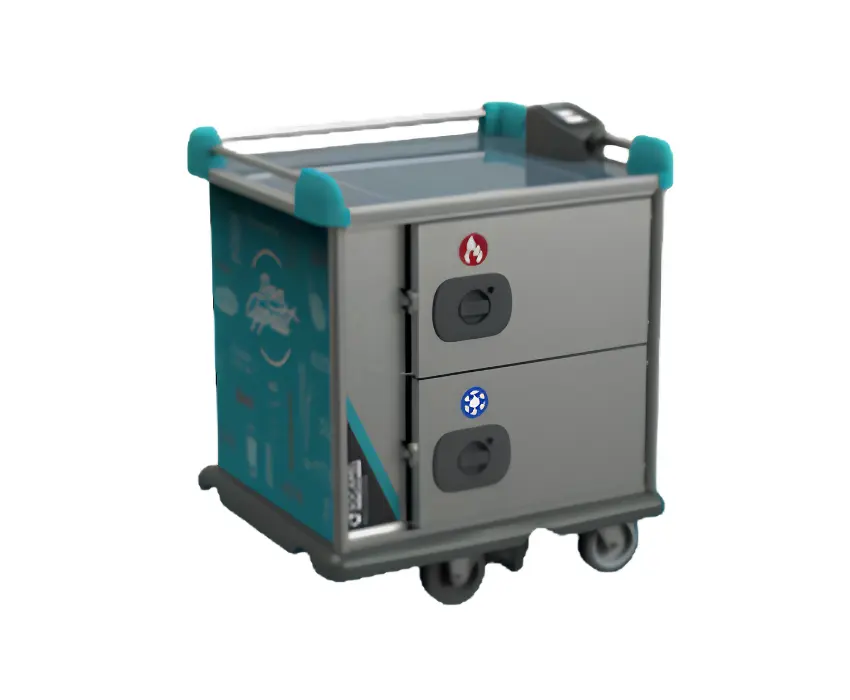
Junior
Compact, capable and built for efficient meal distribution, the MultiServ 4S Junior delivers reliable performance in a practical, space-conscious format.
Socamel MultiServ 4S Range FAQ's
When selecting a trolley for high volume meal service, consider the number of meals served during service period, required trolley capacity, service frequency and the distance between the kitchen and dining or patient areas. The trolley should also fit comfortably through corridors, doorways and lifts while providing sufficient manoeuvrability for staff.
Other important factors include temperature performance, loading and unloading efficiency, ease of cleaning, storage requirements and staff ergonomics. For large scale operations, choosing a configuration that matches the meal volume can help reduce unnecessary trips and support a more efficient distribution workflow.
Rapid temperature recovery is particularly important in high volume meal service, where trolleys may be opened frequently during loading, distribution and serving. Efficient temperature recovery helps minimise temperature fluctuations and supports consistent conditions throughout the service period.
This can be especially valuable in healthcare and aged care environments, where maintaining appropriate food temperatures is an important part of safe and consistent meal distribution. The overall performance will depend on the trolley configuration, operating conditions and service procedures.
A dedicated meal distribution system can help streamline the movement of meals from the kitchen to multiple service locations. By combining meal transport and temperature management, it can reduce unnecessary handling, transfers and repeated trips bewteen areas.
For high volume operations, the right trolley capacity and configuration can also help staff organise meals more effectively, establish a consistent loading and delivery process and serve more meals within the available service window. This can contribute to a smoother workflow and more predictable meal service.
Yes. A suitable meal distribution system can be configured to accommodate different operational requirements, including varying meal volumes, service locations and hot and cold meal components.
The Socamel MultiServ range provides different configurations designed to support high volume meal distribution, allowing facilities to select a solution based on their capacity requirements, workflow and available space. The appropriate configuration will depend on the facility's menu, service model and operational needs.
Ease of loading and unloading is important, particularly in high volume environments where staff may handle hundreds of meals during a service period. A practical trolley design can help reduce unnecessary handling and make the loading process more organised and efficient.
Easy access to meal compartments can also help staff work more consistently and reduce the time required to prepare the trolley for distribution. When assessing a trolley, consider how easily staff can load trays or meal components, access them during service and unload the trolley after distribution.
Ergonomics are an important consideration because staff may move, load, unload and clean meal distribution trolleys several times throughout the day. A trolley that is easy to manoeuvre and provides practical access to its compartments can help make these repetitive tasks more comfortable and efficient.
When selecting a trolley, consider manoeuvrability, handle positioning, access to meal compartments, trolley weight, turning requirements and the physical layout of the facility. Good ergonomic design can help support safer and more efficient day to day operation.
The right meal distribution system can help reduce pressure on catering staff by making meal preparation, transport and service more organised. An appropriate trolley capacity can reduce unnecessary trips, while an efficient loading and unloading process can minimise repetitive handling and delays.
By supporting a consistent workflow from kitchen preparation through to meal delivery, the system can help staff spend less time on avoidable transport and handling tasks and more time focusing on the service itself. The greatest benefits are achieved when the trolley configuration is matched to the facility's meal volumes, staffing levels and workflow.
Healthcare and aged care facilities should consider meal volumes, service schedules, patient or resident needs, temperature control, hygiene requirements and the physical layout of the facility. The trolley should be easy for staff to manoeuvre though corridors, doorways and lifts while providing suitable capacity for the required number of meals.
It is also important to consider ease of cleaning, staff ergonomics, loading and unloading, storage and the ability to accommodate different meal requirements. A well matched system should support safe and efficient meal distribution while helping staff maintain consistent service standards.
The Socamel MultiServ 4S range is designed for demanding institutional foodservice environments where efficient, high volume meal distribution and controlled temperature management are important. The most suitable configuration will depend on the individual requirements of each facility.